
Six of the Most Commonly Overlooked Machine Safety Requirements

David W. Kerr, E.H.S Consultant, MPSA
February 5, 2018

But in the end, safety issues will lead to safety citations, near-miss incidents, or worse.
Typically, the first step to understanding the risks and regulatory regulations associated with your plant machinery and any gaps in machine safeguarding is to complete a machine safety survey or risk assessment. This process identifies the required functionality of your machinery, including material handling, and the tasks associated with start-up, normal operation, clearing of jams, periodic adjustments as well as service, maintenance and repair. Risks associated with these tasks are then analyzed based on frequency, severity and avoidance to allow for the selection of the most suitable guarding or safety control solution.
Each hazardous energy source must be provided with a suitable means to safely remove and relieve all active or accumulated forms of hazardous energy (electrical, chemical, pneumatic, hydraulic, gravity, etc.) before service maintenance or repair tasks are undertaken.
Properly designed and installed ZES isolation devices can cut maintenance and repair times drastically and allow your employees to quickly and safely apply their personal Lockout/Tagout (LOTO) devices to achieve a safe and compliant zero-energy state.
These devices can include the following:

Dump valves
for hydraulic and pneumatic systems

Double block & bleed valves
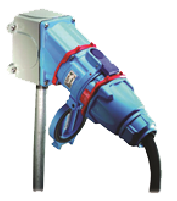
Plug disconnect devices
for cord and plug power supply
Machine guarding achieves little if a machine operator can defeat the purpose of the guarding. Durable and tamper-resistant barrier guarding prevents machine operators from reaching Around, Under, Though or Over (A-U-T-O) fixed guarding to gain access to moving or hazardous machine parts.
Robust and durable structural barrier guarding devices and systems can include the following:

Fixed perimeter machine guarding

Hinged lathe safety guarding

Drill press safety guarding
You are playing with fire (and very likely in violation) if your current safety control system relies on the use of general purpose mechanical relays, standard photoelectic sensors, toggle/limit switches, or a standard programmable logic controller (PLC). Only listed or approved safety-rated control devices ensure a complete mechanical stop or physically prevent access to a moving or hazardous machine part.
The correct selection of these devices must be based on the machine operator’s duties, access needs, materials handled and the frequency and speed of moving or hazardous parts. The use or reliance on standard-service machinery control devices and circuit components may not be a suitable or compliant option. These safety-rated control devices can include the following:
These safety-rated control devices can include the following:

Door-handle actuators
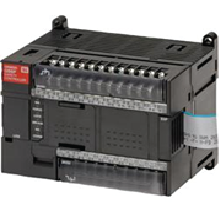
Safety controllers
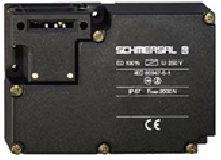
Solenoid interlocks
Normal machine stop and emergency stop controls have two completely different objectives and may have completely different technical requirements.
Machine stop control devices can include the following:

Emergency stops
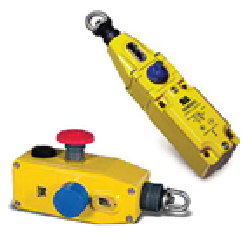
Rope pull switches
In order for the proximity and access controls devices (e.g., light curtains and scanners) to properly function, they must also be properly installed, calibrated and tested according to the manufacturer’s specifications.
Machine stop control devices can include the following:

Safety light curtains

Machine stop-time analysis
There also must be validated operation, inspection, testing, and maintenance protocols for your machine safety control systems. Lastly, all machine safety control devices and systems must be included as part of your preventative maintenance, mechanical integrity, or management of change program.
In Conclusion…
About the Author
David W. Kerr has over 35 years of global EHS experience and retired as Director of Global Safety & Loss Prevention for Merck & Co., Inc. As MPSA’s EHS Program Specialist, Dave assists the MPSA Team and its clients with machine safety programs, compliance and training needs.
“Helping others to comply with EHS regulations & preventing serious, if not fatal injuries has been my life’s work.”
Recent Blog Posts:

Never Hire a Machine Safety Company Without Asking These 10 Questions
There are many machine safety companies claiming to be the best. But when you know what to ask them, you’ll find some only offer a partial solution, causing further research and outsourcing for various aspects of the job. So how do you know when a machine safety company is the right one to partner with? Here are the ten most important questions and considerations to ask when interviewing a potential safety partner.

Machine safety issues keeping you up at night?
With downsizing efforts impacting every industry, the availability of in-house expertise in machine safety has declined. Still, you bear the responsibilty to provide a safe and compliant work environment for employees. The stakes are high, and machine-related injuries or audit findings are always in the back of your mind. You know your machinery needs to become safe and compliant, but you’re just not sure how to get there.
Provide a safe and compliant working environment.
Take the first step. Ask MPSA to identify your safety and compliance issues. We can do the rest.
Have a safety concern? Tell us about it!
Ask a Quick Question
Ask a quick question about machine guarding or MPSA.
Contact an Expert
Ask an in-depth question or start a discussion with one of our safety experts.
Request a Hazard Assessment
Request an MPSA professional on-site visit to identify hazards in your machinery and processes.